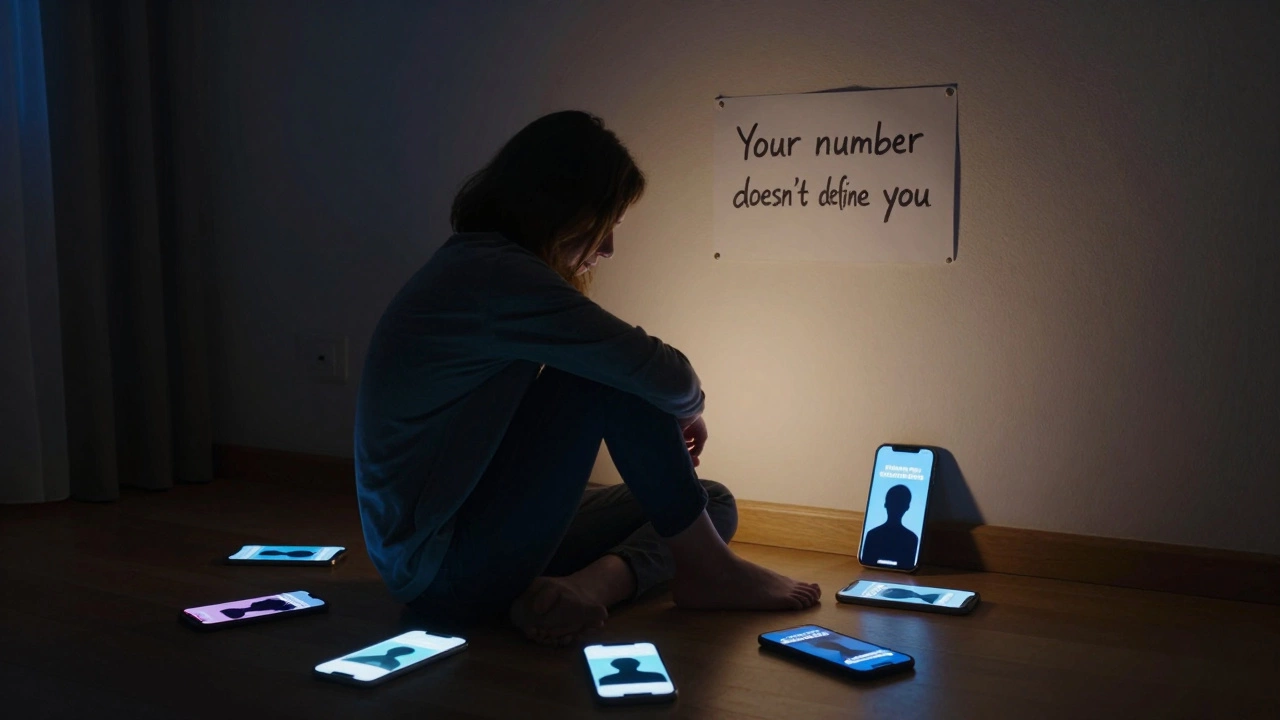
People talk about sex numbers like they’re a score on a test you failed. You’re supposed to have a certain number by a certain age, and if you don’t, you’re weird. Broken. Too shy. Too wild. Too late. Too early. But here’s the truth: your sex number doesn’t define you. It doesn’t measure your worth, your desirability, or your emotional maturity. It’s just a number - and numbers can lie.
I’ve read stories from people who’ve had one partner their whole life and felt ashamed. I’ve talked to others who’ve had dozens and still feel empty. The real issue isn’t the number. It’s the noise around it. The pressure. The judgment. The social media posts that make you feel like everyone else is living some fantasy while you’re stuck in your apartment scrolling through euro girls escort london galleries wondering if that’s what normal looks like. Spoiler: it’s not.
Where Did This Number Even Come From?
There’s no biological clock for sexual experience. No rulebook written in stone. The idea that you should have X partners by Y age came from movies, porn, and drunk conversations at parties in the 90s. Studies from the Kinsey Institute and the CDC show wide variation - some people have one partner, others have fifty. The median in the U.S. is around 8-10 for adults over 30, but that’s an average. It doesn’t mean anything for you.
What matters is context. Did you have your first experience at 17 because you were curious? Or because you felt pressured? Did you have a long-term relationship that ended naturally? Or did you date briefly because you were exploring? These are the real stories behind the numbers. Not the count. The why.
Why Do We Care So Much?
It’s not about sex. It’s about control. Society wants to label people. If you’re quiet, you’re repressed. If you’re loud, you’re loose. If you’re single, you’re undesirable. If you’re in a relationship, you’re settled. We turn intimacy into a performance. And then we grade it.
Women get called names for having more than one partner. Men get praised for the same thing. That’s not about sex - that’s about outdated gender scripts. And those scripts are crumbling. Younger generations are starting to reject them. More people are saying: "I don’t owe anyone an explanation for my past."
What Does "Normal" Even Mean Here?
Normal is a myth. There’s no such thing as a normal sex number. There’s only your truth. Someone might have had 20 partners and still feel lonely. Someone else might have had one and feel deeply connected. One person’s "normal" is another person’s nightmare. And that’s okay.
Let’s say you’ve had three partners. That’s it. Maybe you waited until marriage. Maybe you were in a toxic relationship and got out. Maybe you just didn’t meet anyone you clicked with. None of that makes you less than. It makes you human.
And if you’ve had more? Same thing. Maybe you were young and experimenting. Maybe you were healing. Maybe you were lost. None of that makes you a statistic. It makes you someone who lived.

The Real Problem: Shame
Shame is the real enemy here. Not the number. Not your past. Shame tells you that your body, your choices, your history are wrong. It whispers: "You should’ve done more." Or: "You should’ve done less."
Shame thrives in silence. That’s why people hide their numbers. That’s why they lie. That’s why they compare themselves to strangers on Instagram or to fictional characters in rom-coms. But shame can’t survive in the light.
Here’s what helps: talking. Not bragging. Not defending. Just saying it out loud. "I’ve had X partners. And I’m not ashamed." That simple sentence breaks the spell.
What If You Want to Change?
Maybe you’re not happy with your number. Maybe you want more. Maybe you want less. That’s valid. But don’t chase a number. Chase connection. Chase comfort. Chase clarity.
If you want to date more, start by asking yourself: "Am I doing this because I want to, or because I’m afraid I’m falling behind?" If you want to slow down, ask: "Am I doing this because I’m tired, or because I’m scared of being judged?"
There’s no rush. There’s no timeline. Your body doesn’t have an expiration date. Your worth isn’t tied to how many people you’ve been intimate with. It’s tied to how you treat yourself - and others.

When Numbers Become a Trap
Some people use their sex number as armor. "I’ve had 15 partners - so I’m cool." Others use it as a shield. "I’ve only had one - so I’m pure." Both are traps. Both reduce a deeply personal part of life to a label.
Numbers can’t capture vulnerability. They can’t capture the way someone held your hand after you cried. They can’t capture the first time you said "I love you" and meant it. They can’t capture the quiet mornings after, the inside jokes, the unspoken understanding.
Those moments? Those are the real memories. Not the count.
What About the Euro Escort Girls London Trend?
There’s a growing online space where people search for things like euro girl escort london or euro escort girls london. These searches often come from curiosity, loneliness, or a distorted idea of what intimacy looks like. Some people think these services are a shortcut to connection. They’re not.
Professional companionship is a transaction. It’s not a replacement for emotional intimacy. It’s not a way to "fix" your sex number. It’s a service. And while it’s legal and regulated in some places, it doesn’t answer the deeper questions: "Am I worthy?" "Am I loved?" "Do I belong?"
If you’re searching for those answers online, you’re not alone. But you’re looking in the wrong place.
You’re Not Behind. You’re Not Broken.
There’s no finish line in this race. There’s no trophy for having the most partners. No medal for being the most experienced. No badge for being the most "normal."
Your past is yours. Your body is yours. Your story is yours. No one else gets to write it. No statistic, no trend, no influencer, no algorithm gets to tell you what your number should be.
So if you’re reading this and you’re still carrying shame - let it go. You don’t need permission to be who you are. You just need to stop listening to the noise.
Be kind to yourself. Be honest. Be patient. And if you ever feel like you need to prove something - remember: the only person you’re proving it to is yourself. And you already know the truth.